








Agentic search is the next practical shift in AI search. Instead of asking an AI tool for a short answer, users can ask an AI agent to research, compare, decide, and sometimes take action on their behalf.
That matters for SEO because the agent does not behave like a normal searcher. It can split one request into many sub-queries, check multiple sources, compare claims across the web, and decide whether a brand is trustworthy enough to recommend.
For SEO teams, this means visibility is no longer only about ranking for one keyword. It is about making the brand easy for search engines, answer engines, and autonomous agents to understand, verify, and use.
That starts with an agent-ready website where semantic HTML, accessible controls, policy clarity, and action boundaries reduce the amount an agent has to infer.
What Is Agentic Search?
Agentic search is AI-powered search that can pursue a goal, gather information, compare sources, and complete parts of a task with limited step-by-step prompting from the user.
Classic search returns results. AI answer engines summarize information. Agentic search goes further by planning what to check, choosing sources, and moving toward an outcome.
For example, a user might ask, “Which project management tool should my remote team use?” A basic search engine returns links. An AI answer engine summarizes a few options. An agentic search system may compare pricing pages, review platforms, integration lists, Reddit discussions, and product documentation before recommending a shortlist. In ecommerce, that same behavior becomes agentic commerce, where agents may also evaluate product data, policies, and checkout paths.
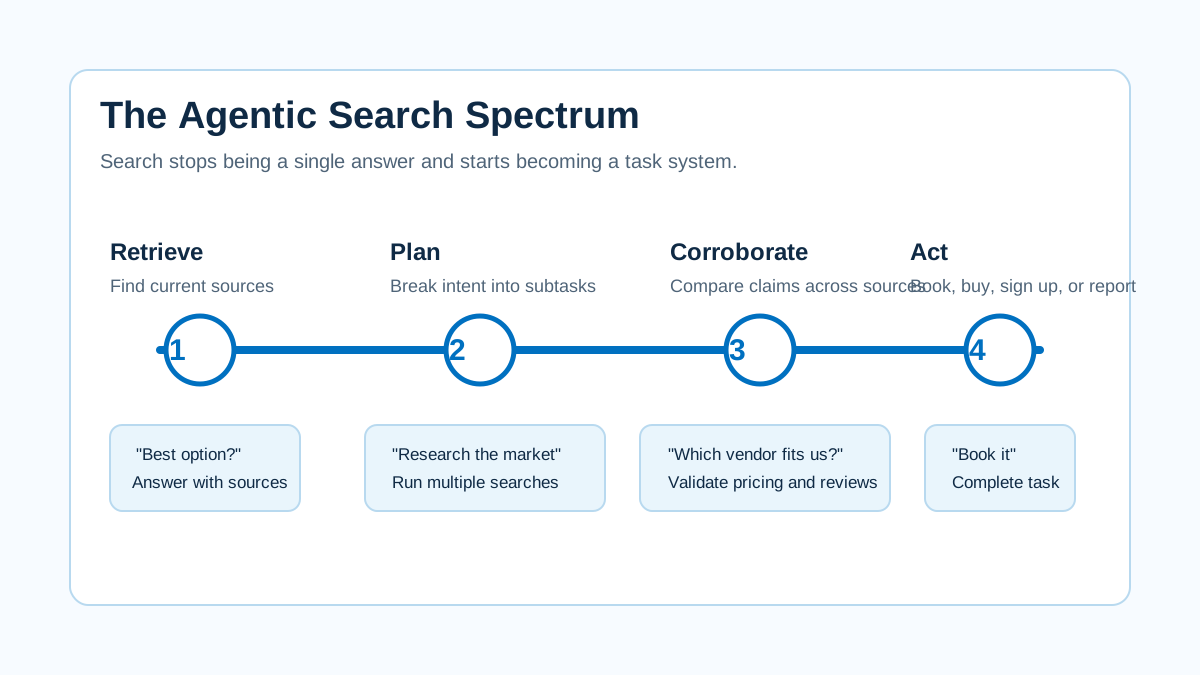
The important point is autonomy. The agent does not only answer. It evaluates the next step needed to satisfy the user’s goal.
How Is Agentic Search Different From AI Search?
Agentic search differs from AI search because it is goal-driven, multi-step, and action-oriented. A normal AI answer may synthesize a response from retrieved sources. An agentic system can keep working after the first response.
That extra layer changes what SEO has to optimize for. A page can rank well for a query and still fail if an agent cannot extract pricing, identify who the product is for, validate claims through third-party sources, or find enough proof to recommend the brand.
Agentic systems also use query fan-out. One user request can become many related searches. A prompt about “best SEO agency for a SaaS migration” may trigger checks for SaaS SEO experience, migration case studies, pricing transparency, technical SEO credibility, founder expertise, reviews, and brand mentions.
This makes topical coverage and entity consistency more important. A single optimized page is useful, but agents need a reliable pattern across your website and the wider web. That is why AI source coverage matters for agentic SEO.
Why Should SEOs Pay Attention Now?
SEOs should pay attention now because agentic search changes how visibility gets earned before the final click. The user may never compare ten blue links. The agent may do that work first.
This does not make traditional SEO irrelevant. Crawlability, content quality, internal links, structured data, links, and brand authority still matter. The difference is that agents may pull from a wider set of sources than a standard search results page.
Rankings still help. They can place your content inside the retrieval pool. But rankings are no longer the whole visibility story because agentic systems may also inspect:
| Source Type | What An Agent Looks For | SEO Risk |
|---|---|---|
| Website pages | Pricing, features, audience fit, proof, schema | Important facts hidden in scripts or vague copy |
| Review platforms | Use cases, objections, company size, outcomes | Generic or outdated reviews |
| Communities | Real sentiment, recurring complaints, workarounds | Brand claims contradicted by users |
| Editorial sources | Comparisons, expert lists, category guides | Weak third-party validation |
| Logs and protocols | Crawl access, AI bot behavior, machine-readable paths | Blocking useful agents or missing feeds |
The SEO opportunity is to become the easiest credible answer for an agent to verify.
What Do AI Agents Actually Evaluate?
AI agents evaluate consistency. They look at your own claims, then check whether the rest of the web supports or contradicts those claims.
If your pricing page says one thing, your G2 profile says another, and old comparison articles describe a previous positioning, the agent has to resolve that conflict. Many systems will add caveats, choose a competitor with clearer signals, or avoid making a confident recommendation.
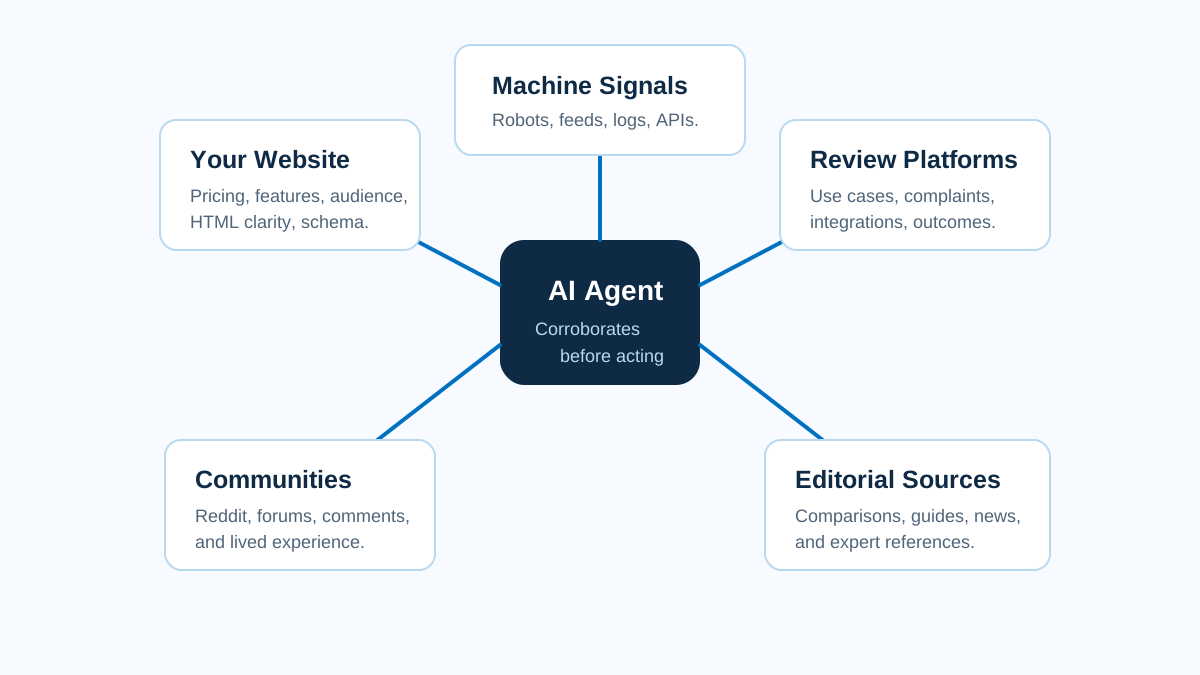
Your website remains the starting point. It should explain what you do, who you serve, what the offer costs, how the product or service works, and what proof supports the claim.
Review platforms add user-level evidence. Strong reviews mention use cases, company size, outcomes, integrations, support quality, and limitations. Thin reviews are less useful because they do not help the agent match the brand to a specific buyer.
Community sources add friction and realism. Reddit threads, forums, social comments, and niche communities often reveal the questions users ask when they do not trust marketing copy.
Editorial mentions add external validation. Category guides, comparison articles, analyst content, podcast pages, and expert roundups can all help agents understand where the brand fits.
How Does Agentic Search Change SEO Strategy?
Agentic search pushes SEO from page optimization toward source orchestration. You still need strong pages, but those pages must connect to consistent brand facts across the web.
The biggest strategy change is that “content depth” and “content breadth” have to work together. Depth helps agents extract complete answers from one page. Breadth helps agents find the same entity, claim, and proof across related searches.
A strong agentic search strategy should cover:
| SEO Layer | Agentic Search Requirement |
|---|---|
| Technical SEO | Crawlable HTML, fast pages, accessible navigation, structured data |
| Content SEO | Clear answers, comparison sections, pricing clarity, audience fit |
| Entity SEO | Consistent names, categories, founders, services, locations, and sameAs links |
| Review SEO | Detailed customer proof and updated profiles |
| Digital PR | Third-party references that confirm expertise and positioning |
| Log analysis | Monitoring AI crawlers, blocked bots, and unusual retrieval behavior |
This is why AI SEO cannot live as a separate experiment forever. It needs the same operating system as technical SEO, content strategy, entity building, and brand authority.
How Can You Audit Readiness for Agentic Search?
Start with a cross-source consistency audit. Agents can only recommend confidently when your facts are easy to extract and hard to contradict.
Audit the claims that influence a recommendation: pricing, features, audience, categories, integrations, case studies, locations, founder signals, and service scope.
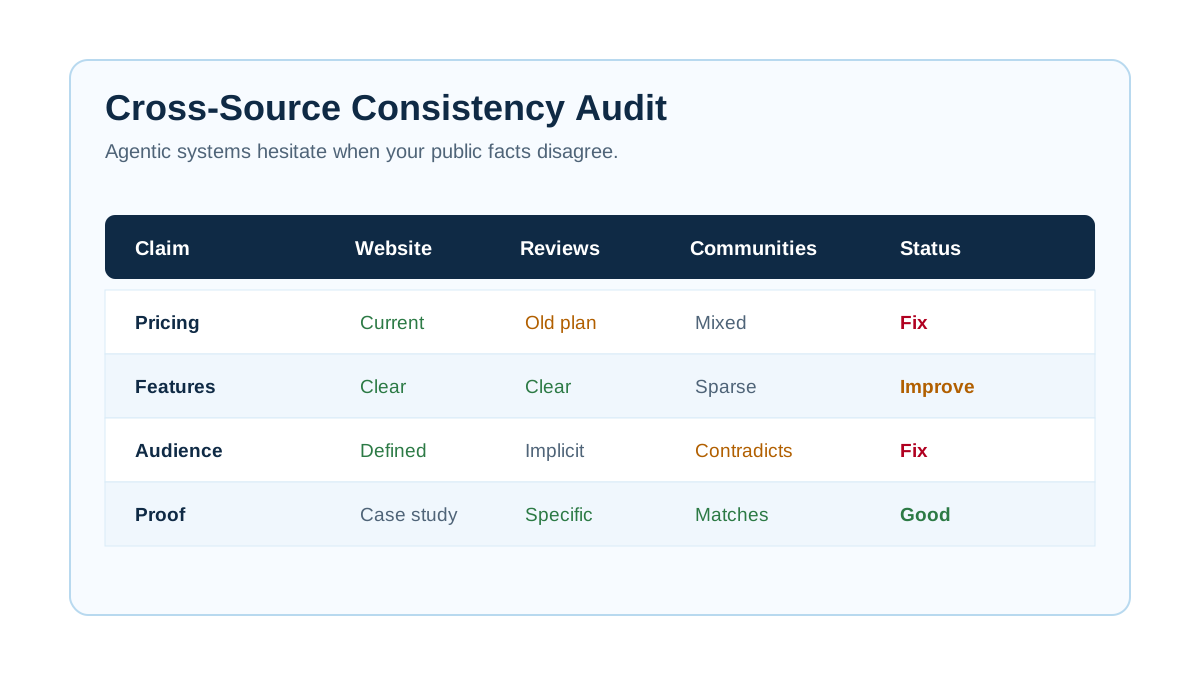
Then compare those claims across four places:
| Place To Check | Questions To Ask |
|---|---|
| Website | Are pricing, features, and service descriptions current and crawlable? |
| Review profiles | Do reviews reflect the current product, service, audience, and outcomes? |
| Community discussions | Do real users describe the brand the same way the brand describes itself? |
| Editorial mentions | Do comparison pages and guides use updated positioning? |
Fix the contradictions first. A perfect new landing page cannot fully solve an old entity problem if agents keep finding stale descriptions elsewhere.
What Should SEO Teams Do First?
SEO teams should prepare for agentic search by making the brand easier to parse, verify, and recommend. The work is practical, not mystical.
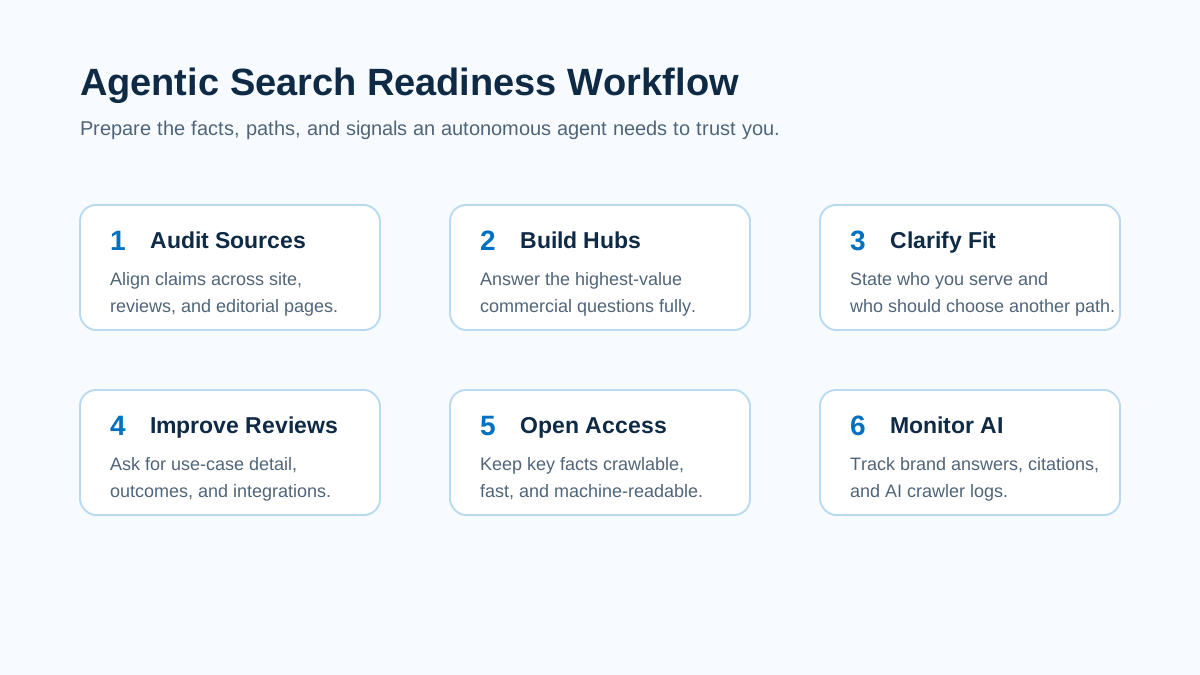
Start with these actions:
- Run a cross-source consistency audit for your top products, services, and brand claims.
- Build hub pages for your highest-value commercial questions.
- Make audience fit explicit, including who the offer is not for.
- Ask customers for detailed reviews that mention use case, outcome, and context.
- Keep important information accessible in crawlable HTML.
- Add structured data for Organization, Person, Service, Article, FAQ, and Review where relevant.
- Monitor AI visibility, brand answers, cited sources, and AI crawler activity in server logs.
The goal is not to “trick” AI agents. The goal is to remove ambiguity.
Which Pages Matter Most for Agentic Search?
The most important pages are the ones an agent would need to complete a recommendation. These are usually not only blog posts.
Prioritize:
| Page Type | Why It Matters |
|---|---|
| Homepage | Establishes entity identity, positioning, and main category |
| About page | Connects founder, team, experience, and trust signals |
| Service or product pages | Explains offer, fit, features, pricing logic, and proof |
| Comparison pages | Helps agents resolve alternatives and use cases |
| Case studies | Shows outcomes, context, and evidence |
| Pricing pages | Gives agents a concrete decision factor |
| FAQ sections | Answers objections in extractable language |
For Winning SERP, that means agentic search readiness is closely tied to AI SEO services, technical SEO audits, SEO content writing services, and entity-focused SEO.
How Should You Measure Agentic Search Visibility?
Measure agentic search visibility by tracking what AI systems say about your brand, which sources they cite, and whether those answers match your intended positioning.
Classic rank tracking will not be enough. You also need prompt tracking, answer monitoring, source analysis, and server log review.
Useful checks include:
| Check | What To Record |
|---|---|
| Brand prompts | Whether the system understands who you are and what you do |
| Category prompts | Whether your brand appears for high-value buyer questions |
| Comparison prompts | How agents explain your strengths and tradeoffs |
| Citation review | Which URLs, reviews, and third-party pages support the answer |
| Log analysis | Which AI crawlers visit, what they request, and what they cannot access |
The best signal is not just being mentioned. It is being mentioned accurately, in the right context, with enough supporting evidence for the user to trust the recommendation.
What Agentic Search Means for SEO
Agentic search turns SEO into a trust and clarity problem. Agents need to know who you are, what you offer, who you serve, what evidence supports your claims, and whether the wider web agrees.
That rewards brands with clean technical foundations, clear content, strong entity signals, detailed reviews, and credible third-party mentions.
The practical move is to prepare now. Make your facts crawlable. Make your positioning specific. Make your proof visible. Then monitor how AI systems interpret the brand before competitors become harder to displace.