
Platform-Specific SEO Services
WordPress SEO Services
WordPress SEO Services for sites that need stack-aware technical fixes, faster performance, cleaner indexing, and conflict-free schema.




Does This Sound Familiar?
-
Your WordPress site has good content but crawl reports show hundreds of low-value URLs being indexed.
-
Your Core Web Vitals scores are failing and you don't know which plugin or theme is causing it.
-
You've installed multiple SEO plugins and they're producing conflicting meta tags and schema.
What Is WordPress SEO Services?
WordPress SEO Services focus on the search issues that appear when a flexible CMS grows without control. WordPress sites face unique SEO problems, including plugin conflicts, theme bloat, slow TTFB, duplicate content from categories, tags, and archives, plus unnecessary query strings that create low-value URLs. A site can publish strong content and still lose visibility if the stack keeps sending mixed technical signals.
A generic audit rarely goes deep enough on WordPress. You need someone who understands hooks, filters, the REST API, and how popular plugins like Yoast SEO, RankMath, WP Rocket, and Elementor change crawl behavior, rendering, and metadata output. That is where WordPress technical SEO differs from a broader site review.
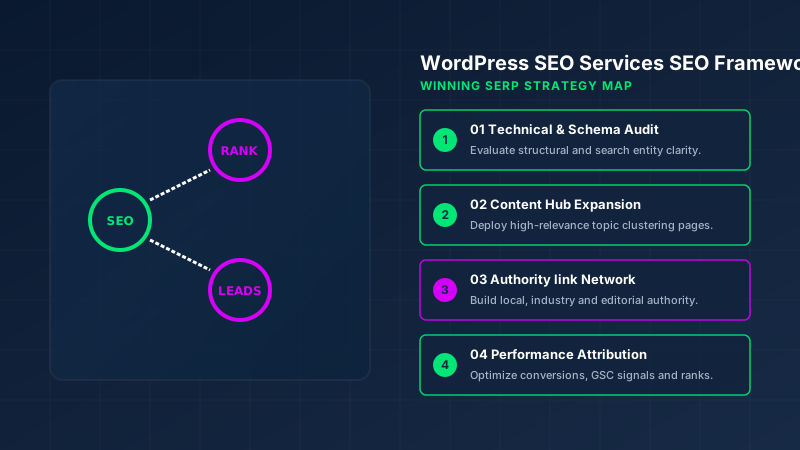
Our approach starts with the stack audit first, then moves into technical fixes, then the on-page and schema layer. We review hosting, PHP version, caching, plugin overlap, sitemap output, canonicals, and frontend weight before we recommend broader page-level changes. That process helps us improve WordPress SEO, reduce duplication, and support cleaner WordPress schema markup without creating plugin collisions.
We also tie platform fixes to performance. WordPress speed optimization often affects WordPress Core Web Vitals through image delivery, render-blocking scripts, and template-heavy builders. If the site runs commerce pages, we extend the review into WooCommerce SEO patterns and connect the work with technical SEO audits and broader SEO services when the platform issues overlap with sitewide search performance.
The goal is a cleaner, faster, easier-to-manage stack. Once the technical layer is stable, titles, internal links, and structured data become easier to scale. If your WordPress site also publishes AI-assisted content, our guide on whether Google penalizes AI-generated content explains why quality, experience, and source checks still matter. You can also book a free call before changing themes, plugins, or SEO settings.
Our WordPress SEO Services Roadmap
What You Get With Our WordPress SEO Services
- WordPress-specific technical SEO audit report with stack-level findings
- Plugin conflict and redundancy analysis across active SEO tooling
- Core Web Vitals baseline with a prioritized improvement roadmap
- Duplicate content and canonical fix implementation plan
- Schema.org corrections with conflict-free JSON-LD recommendations
- Developer handoff documentation for every approved fix
- Post-fix validation report covering crawl and indexation outcomes
How We Deliver WordPress SEO Services Results
-
Step 1
WordPress Stack Audit
We review the theme, plugins, hosting, PHP version, caching layer, and how each piece affects crawlability, rendering, and metadata output. That gives us a WordPress-specific SEO baseline instead of a generic audit summary.
-
Step 2
Technical Fixes
We resolve duplicate content, fix crawl traps, implement the right canonical strategy, and clean up bloated sitemaps. That reduces wasted crawl paths across archives, parameters, and low-value indexable URLs.
-
Step 3
Core Web Vitals Optimization
We improve LCP, INP, and CLS by focusing on the WordPress render pipeline, script loading, image delivery, and template weight. Performance work stays tied to what users and Google actually experience on live pages.
-
Step 4
Schema & On-Page Layer
We correct JSON-LD implementation, remove plugin conflicts, and improve titles and meta descriptions at scale. That helps the site send cleaner relevance and structured data signals without overlapping outputs.
-
Step 5
Monitoring Setup
We configure Google Search Console checks, uptime monitoring, and monthly crawl health reviews. That makes it easier to catch regressions after updates, plugin changes, or theme releases.
Why Teams Trust Winning SERP
Search Behavior Expertise
We plan for multilingual queries, SERP intent shifts, and template risks before they dilute performance. That keeps scale grounded in how people actually search.
Technical-First Mindset
We fix crawl paths, indexation rules, and structured data before scaling page creation. That prevents weak templates from multiplying technical debt.
Transparent Reporting
You get KPI-tied reporting built around indexed pages, clicks, and qualified revenue signals. We explain what changed, why it matters, and what comes next.
WordPress SEO Services - Frequently Asked Questions
Does WordPress need different SEO treatment than other CMS platforms?
Yes. WordPress can be flexible and search-friendly, but it also creates platform-specific risks that generic audits miss. Themes, plugins, archive settings, query parameters, and page builders can all change crawl behavior, rendering, and duplicate content patterns. A WordPress SEO review needs to account for how the stack actually generates pages, metadata, sitemaps, and frontend output.
Which SEO plugin do you recommend - Yoast or RankMath?
The better choice depends on the site setup, not on a universal winner. Yoast SEO and RankMath can both work when the configuration is clean and no overlapping plugin logic exists. What matters most is avoiding duplicate metadata, conflicting schema output, and unnecessary features that slow the stack. We review the current setup first, then recommend the option that fits the site cleanly.
Can you optimize a WooCommerce store for SEO?
Yes. WooCommerce SEO often needs deeper work than a standard blog or brochure site because category pages, filters, faceted navigation, product variants, and template weight create extra technical risk. We review crawl efficiency, indexation, schema, internal links, and performance at both template and page level so product and category pages can compete more effectively.
My WordPress site is slow - is that hurting my rankings?
Slow performance can weaken rankings, especially when poor load behavior affects Core Web Vitals and user experience across key templates. On WordPress, the cause may come from theme bloat, oversized images, render-blocking scripts, weak hosting, or heavy plugin interactions. We trace the performance problem through the actual render pipeline instead of guessing from a single speed test.
Do I need a developer to implement your WordPress SEO recommendations?
Not always, but it depends on the depth of the fixes. Some improvements can be handled through configuration changes in plugins, caching, schema settings, or template controls. Others need developer help for theme updates, hook-level changes, custom canonicals, or performance fixes. We provide developer handoff documentation either way, so implementation is clear and testable.
Ready to Start Your WordPress SEO Services Campaign?
Book a free 30-minute call - no pitch, just clarity on your rankings.